Five distinct Tripo models · First group
People on the street.
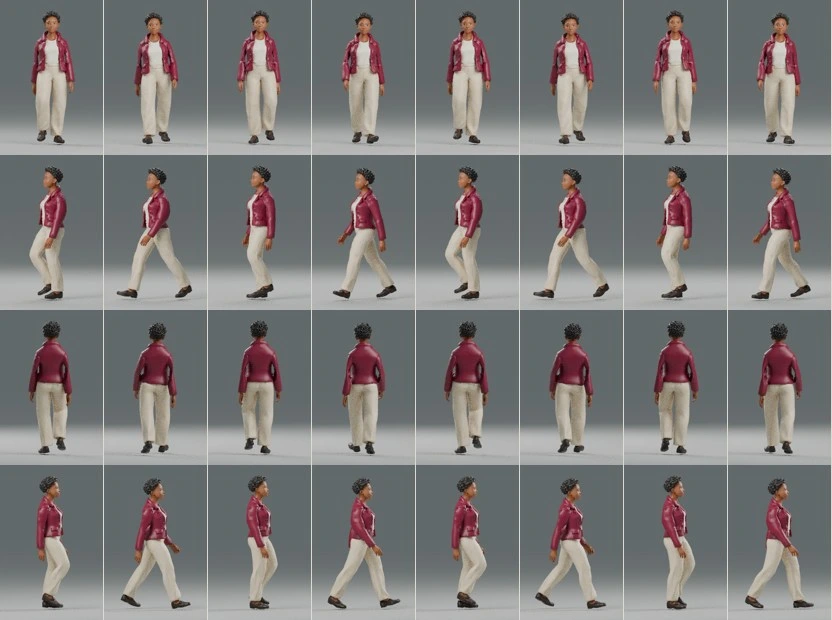
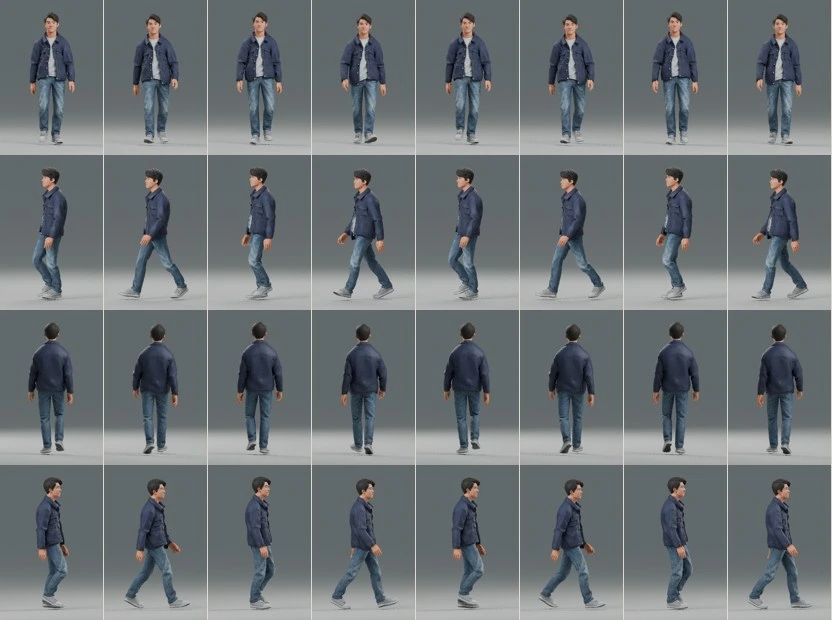
The first two pedestrians are now joined by a woman in a burgundy blazer, a young man in a navy jacket and an older woman in a green cardigan. Each of the five figures has its own geometry, textures and skeleton. The same Tripo walk cycle is adapted to each figure's proportions.
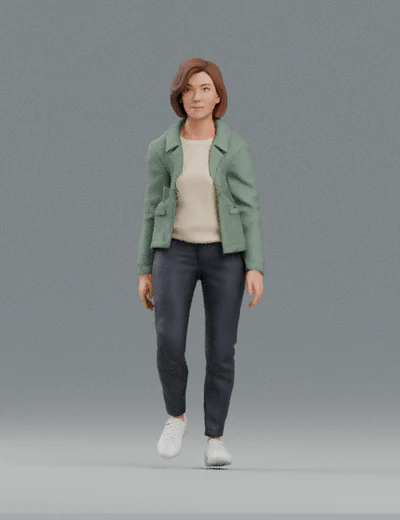 Woman in a green jacket ↗1.67 m · Tripo
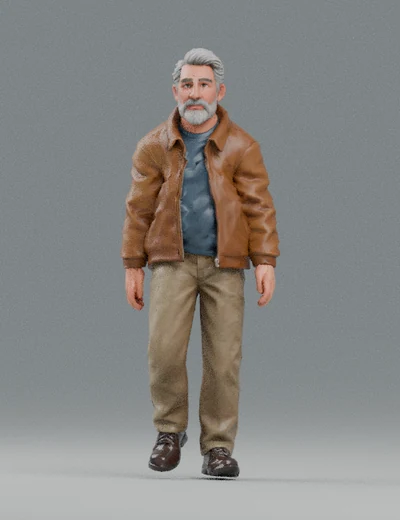 Older man in an ochre jacket ↗1.75 m · Tripo
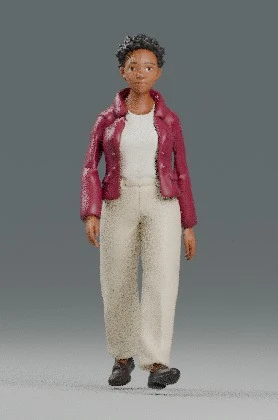 Woman in a burgundy blazer ↗1.75 m · Tripo
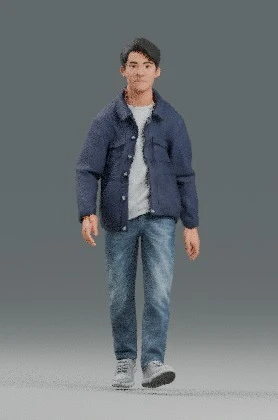 Young man in a navy jacket ↗1.79 m · Tripo
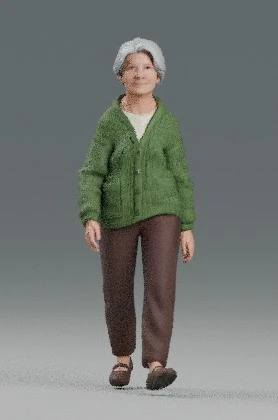 Older woman in a green cardigan ↗1.60 m · Tripo
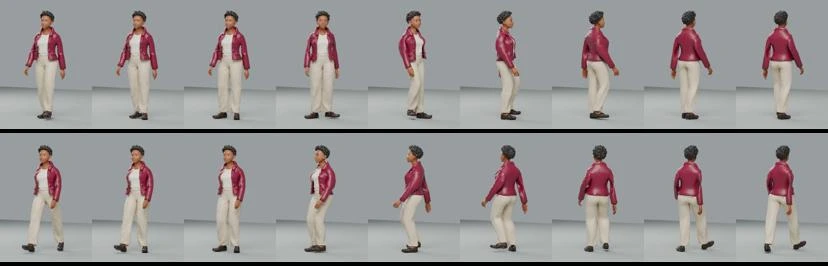
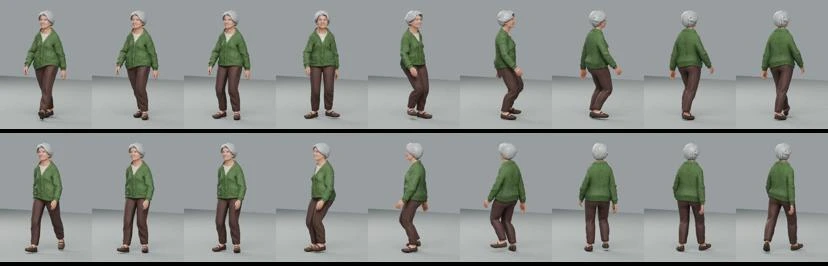
Turning at the end of the path.
Instead of pivoting in place around a single axis, the pedestrian shortens their stride and shifts their weight from one foot to the other. The hem of the burgundy blazer was rebound to the appropriate bones so it doesn't buckle during a step. Slight bunching at the sleeves and shoulders is still visible.
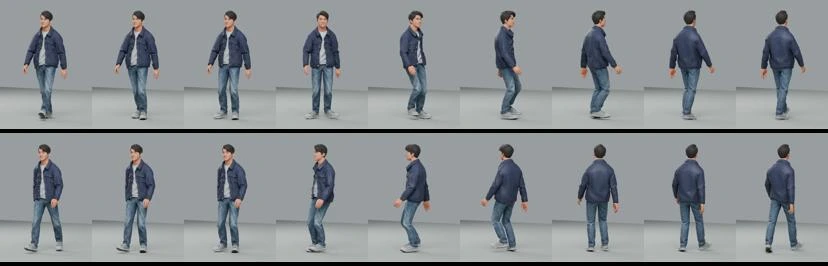
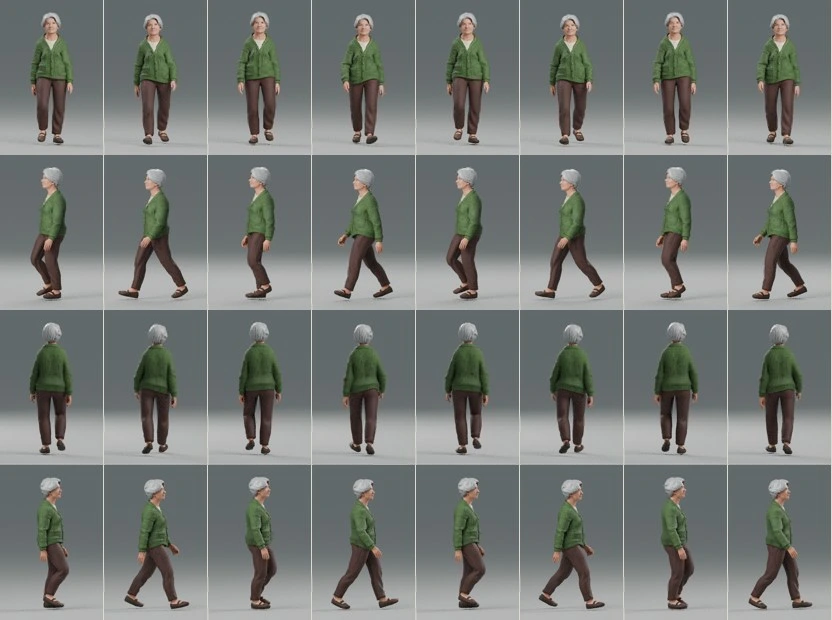
Movement check for the three new figures: 57 poses from the city's animation system, shown against a neutral background. This is not a capture from your GPU.
Checking the walk cycle.
Young man in a navy jacket
Older woman in a green cardigan
How many distinct characters are there?
There are five separately generated and rigged Tripo models, not five copies in different outfits. The same models repeat across the 48 pedestrians in the default district, so there aren't 48 unique appearances. In the initial layout, nearby figures with the same appearance aren't placed side by side. Earlier MakeHuman models and procedural figures are not shown in this setup. The goal is ten distinct characters; this group introduces the first five.
More detailed geometry is limited to three nearby figures at a time. The other figures keep their textures, walk cycles and independent arm and leg poses, but use simpler geometry. Performance was not measured on your device.