01 City loop
Board at the front.
Exit through the middle.
The driver is at the wheel. Ten passengers are seated and two stand holding the handrails. At a stop, one passenger exits through the middle doors, while another boards at the front and takes the seat that just opened up.
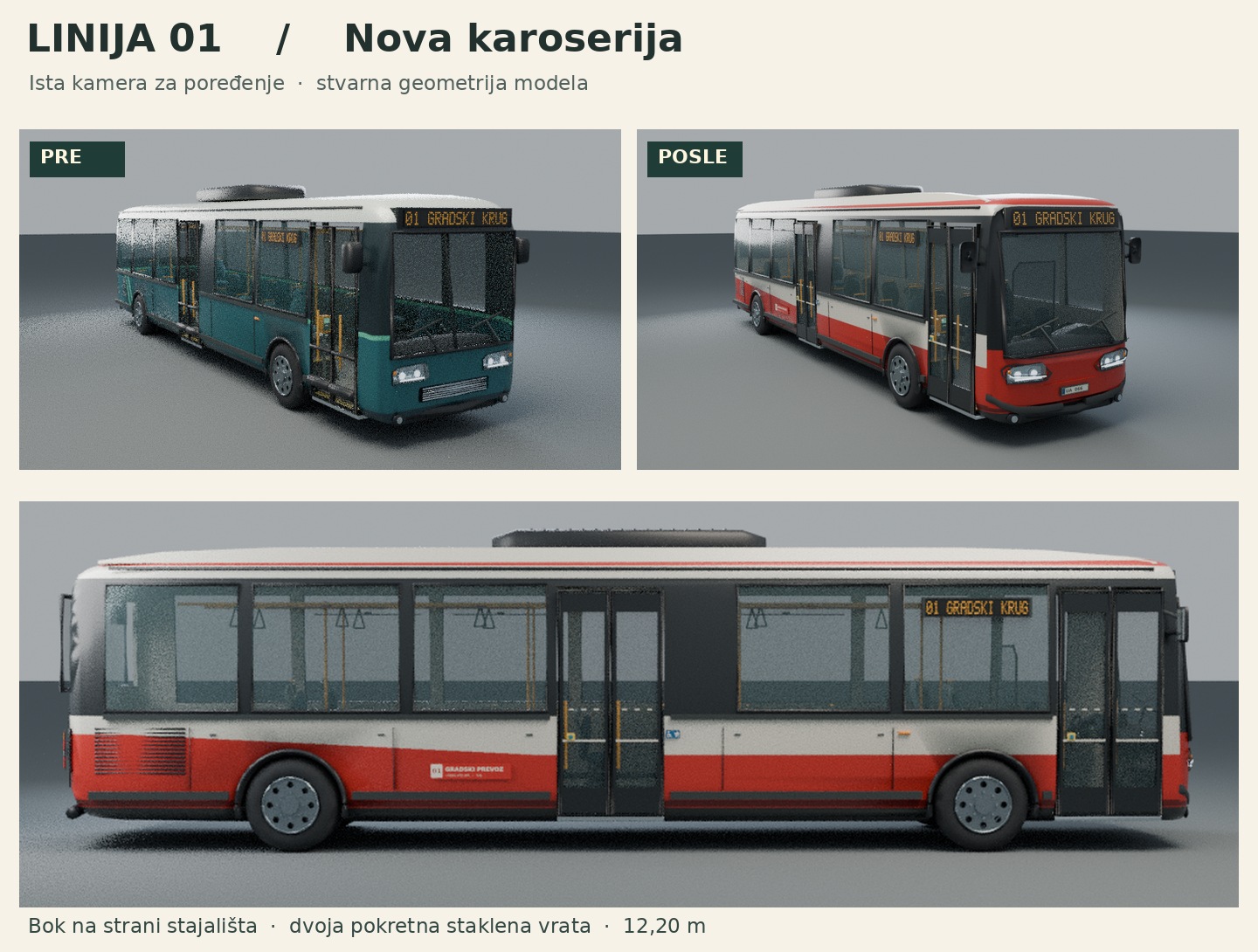
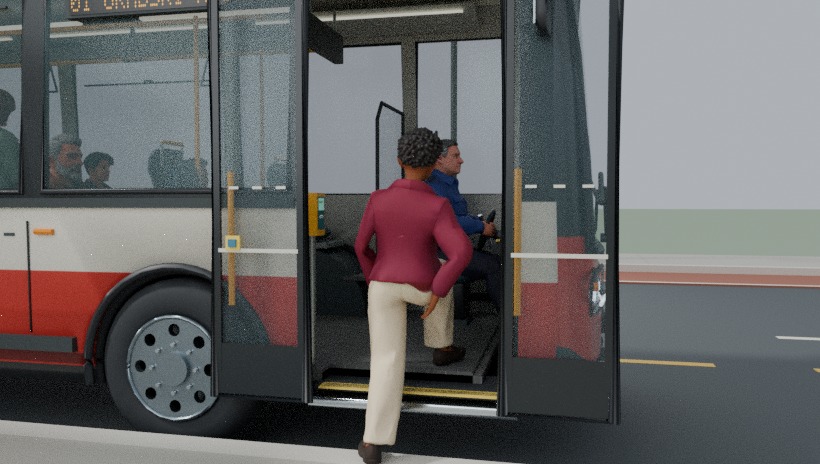
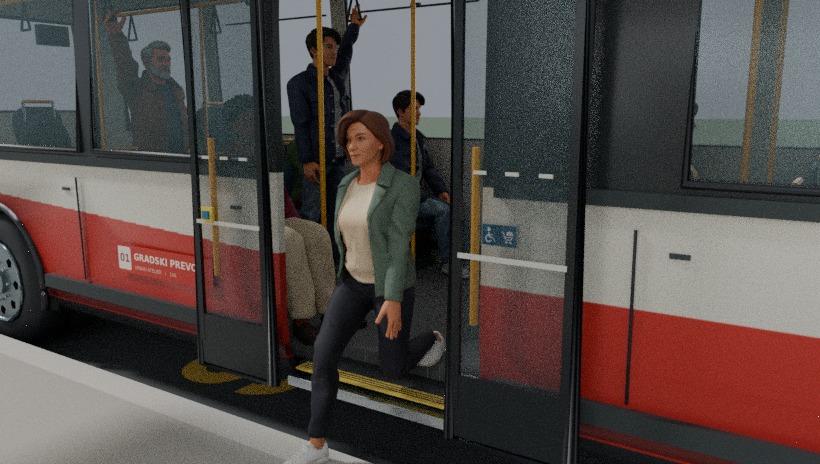
12 + 1passengers and driver at the start
4sheltered stops
17.5 sstop time for boarding and exiting
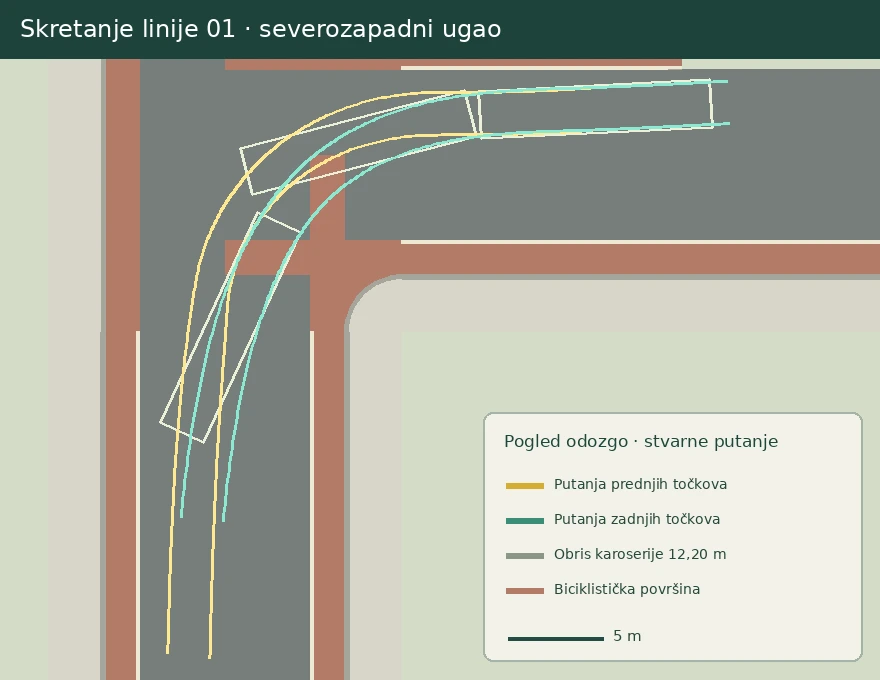
12.20 mbus length
A dedicated driver model.
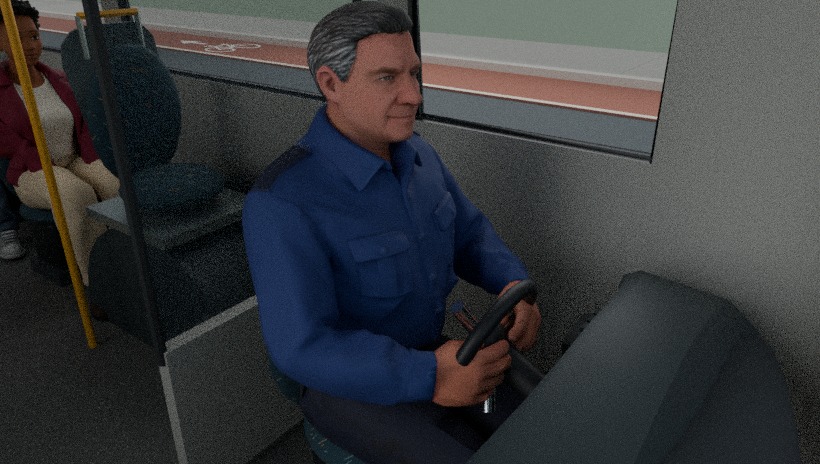
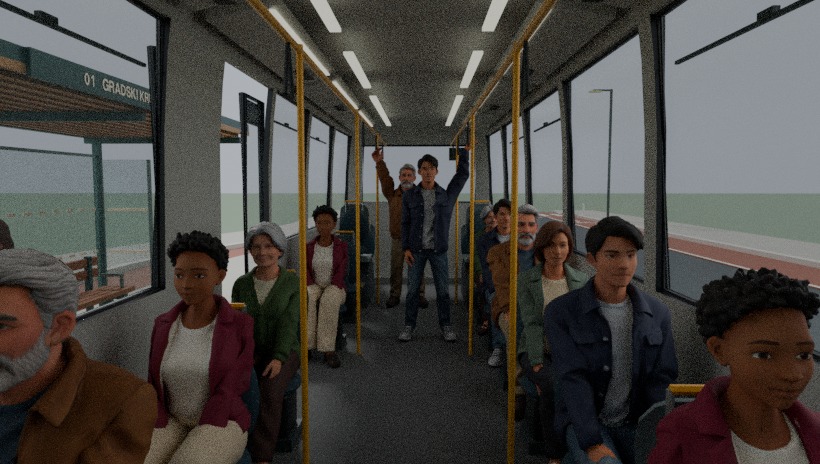
People waiting or stepping off remain on the platform when the bus sets off. At each of the four stops, one passenger boards and one exits to keep the passenger count steady. This is a closed simulation loop, not a transit demand estimate.
A red jacket and a gray sweater.
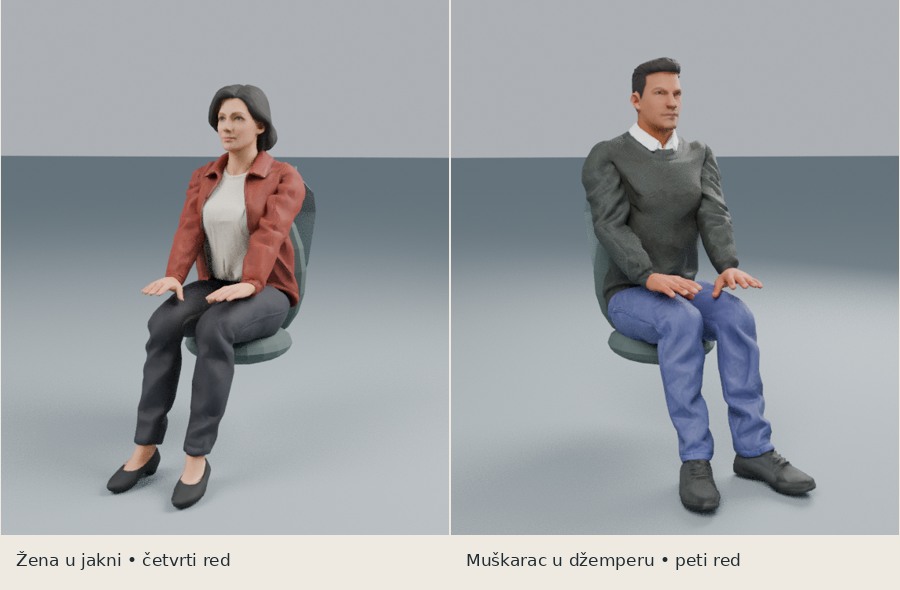
Previous revision: from wipers to axles.
- Doors: Two trim strips previously crossed the doorways. After the update, none of the 2,002 test rays found an obstacle in the checked opening. The front threshold lines up with the marked approach. Ramp deployment and chassis lowering are not simulated.
- Seats: The seat and wheel meshes previously had 432 triangle intersections. The check found none on the four updated platforms.
- Equipment: The side LED display can be read from the platform, and the rear shows route 01. The wipers sit in front of the windshield. Turn signals, brake lights, headlights and daytime running lights have separate surfaces. Glass and mirrors use reflective materials; the mirrors do not display separate camera feeds.
- Driving: The inner front wheel turns more sharply than the outer wheel in a corner. Each wheel rolls according to the distance it actually travels. Checks on the default route covered four turns, traffic lights, and clearance from other vehicles and platforms. No sampled tire or body corner entered the separated bike lane or island. At the intersection, the bus crosses the marked bikeway connection.
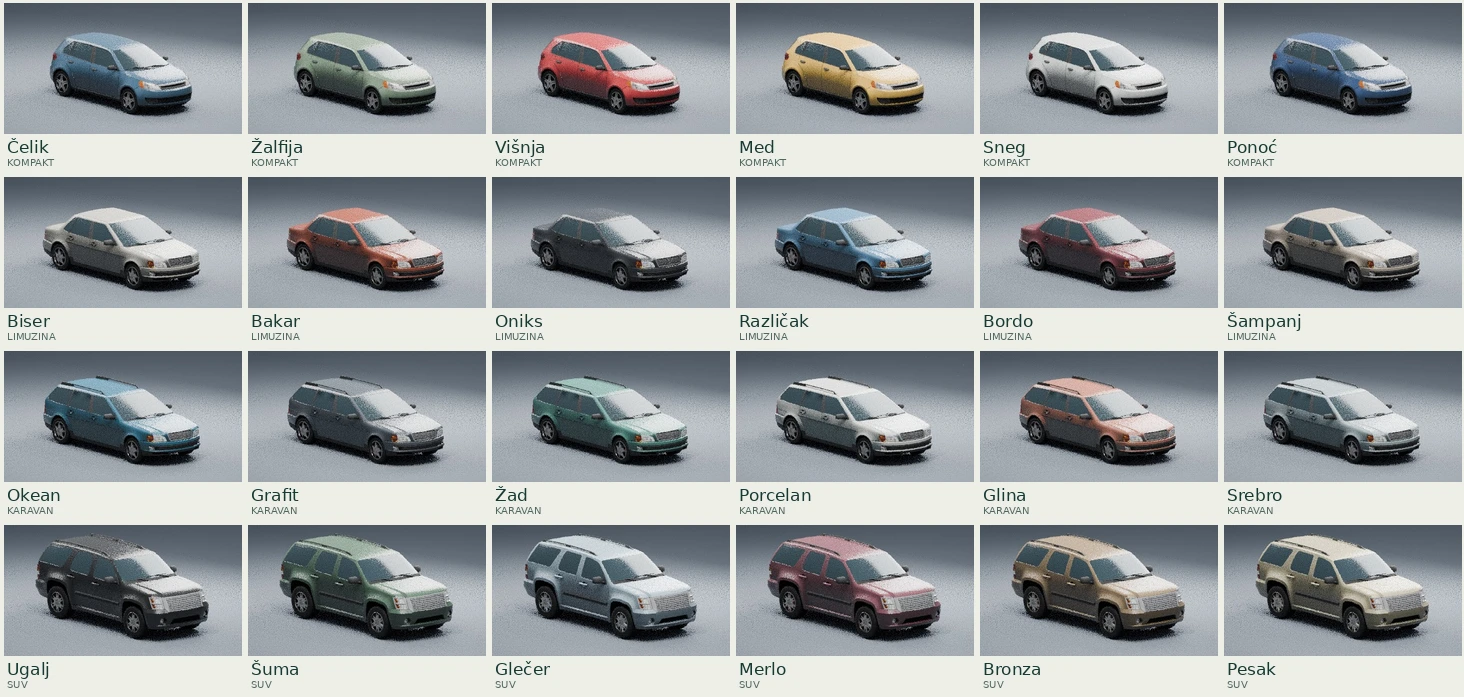
Four models, 24 paint options.
The bus is adapted from Innerscene, 12 m low-floor city bus, CC0 1.0. The characters were generated separately in Tripo. Bus modifications and provenance · Previous release: bus and platforms without passengers.